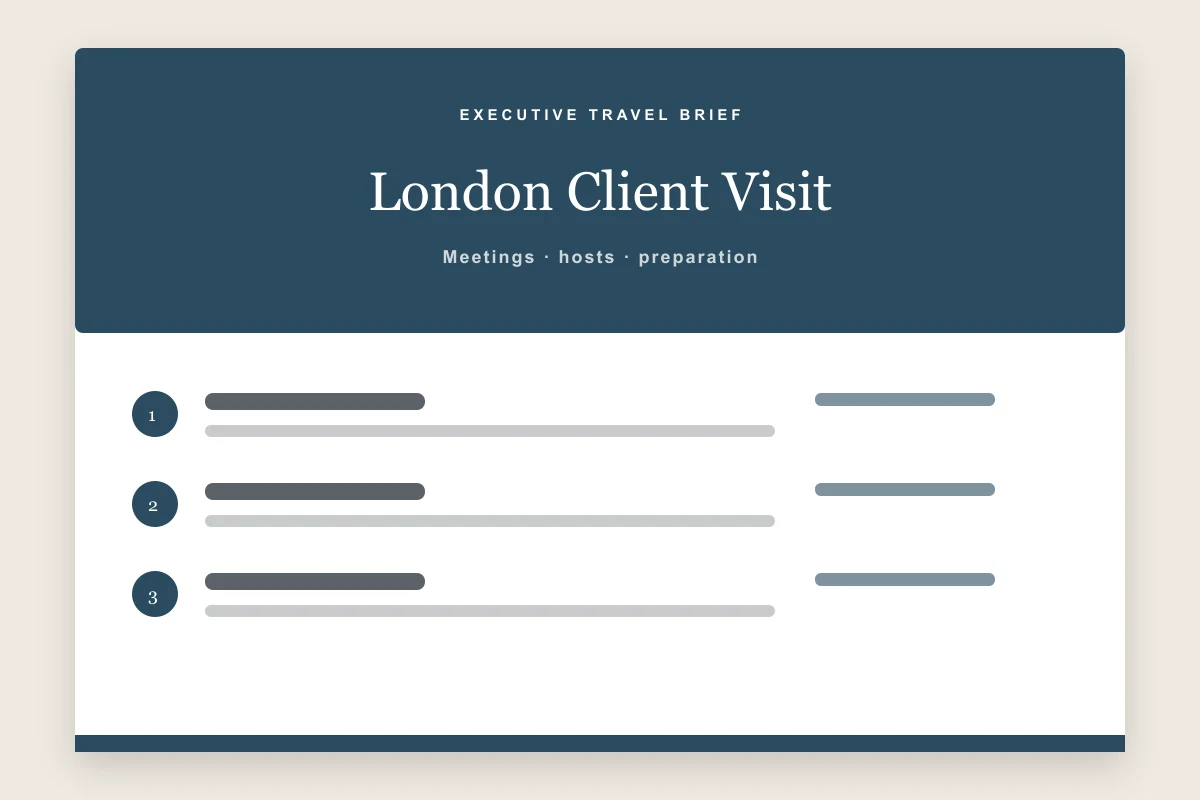
Why does business travel need a dedicated itinerary template?
A business travel itinerary template has to coordinate two schedules at once: the physical journey and the purpose of the trip. A flight delay can affect a client meeting, a hotel location can change the morning transfer, and a missing host name can waste valuable time at reception. A generic sightseeing planner usually lacks the ownership, preparation, and contact fields needed to manage those dependencies.
This template is designed for executives, sales teams, consultants, assistants, event speakers, and small-business owners. It provides a concise handoff between the traveler and anyone arranging the trip. The finished brief shows where the traveler should be, who is expecting them, how to reach the location, and what must be ready before the meeting begins.
What belongs in a business travel itinerary?
Include flight and rail details, local transfers, accommodation, meeting times, full addresses, room or reception instructions, host names, safe contact details, meal commitments, and preparation notes. Add time zones when colleagues or calls cross regions. Use separate rows for travel and meetings so changes do not hide inside a long paragraph.
Build in margin for airport security, traffic, building access, and preparation. Share only the version appropriate to each recipient: a driver does not need confidential meeting objectives, while an internal assistant may need both logistics and contacts. Avoid placing sensitive commercial information, passport scans, payment details, or unrestricted personal phone numbers in a broadly circulated itinerary.